
Learn how to embrace change and pivot with confidence as Dr. Sylvia Morris and Dr. Angela Walker sit down with the dynamic Dr. Melisa Holmes. She shares her unique journey of pivoting from an art major to a successful medical career, defying expectations, and embracing her own path. Discover how her artistic background shaped her approach to medicine and led her to co-found Girlology, a platform providing comprehensive and accessible reproductive health education to girls and their families. Tune in to hear her inspiring story and gain valuable insights on navigating life’s pivots and advocating for girls’ well-being.
—
Watch the episode here
Listen to the podcast here
Dr. Melisa Holmes: Redefining Success Through Fearless Pivots
Be Creative
In this episode, we spoke with Dr. Melisa Holmes. She is a Pediatric Adolescent Gynecologist and Cofounder of Girlology. We had a great conversation on the arts and how parents can let their children fly. We also talked about place. Dr. Holmes is a Southerner, and how important place becomes and how it shapes us. I’m from Los Angeles. Dr. Walker is a Texan. Angela, tell me how does being a Texan shape you?
For me, that was an interesting question because I never considered myself a true Texan because we arrived when I was seven, and my dad was from Reading, Pennsylvania, and my mom was from Newberry, South Carolina. My mom really never embraced the South in terms of Texas until she was well into adulthood. I always learned about the East Coast because she loved the East Coast.
West is best.
What I learned, and I guess part of what I came to appreciate about the South was after I left the South. I went to medical school, as you know, with you at Georgetown in Washington, DC, and that was really the first time I had spent a significant amount of time out of the South. For me, I felt like there was so much diversity that I never really appreciated. I felt I was more appreciated when I left Texas, but I also encountered, I think, what I came to appreciate is Southern hospitality. For me, at least in my experience, it really didn’t matter where you went. It was that time in life, there was a lot more civility and there was still, “How are you?”
You’re walking down the street and you didn’t necessarily feel like a cold air from someone when you were ordering your coffee like, “Come on, get it done, let’s go.” Just a more relaxed atmosphere. Southern hospitality was real for me growing up. However, leaving was a gift because you realize, “There’s more to the world than just this one way of living.”
I think that’s the value of traveling, but that’s getting off the topic of where I’m from. It’s interesting. I think a lot of where you’re from has to do with how you embody that as a young kid growing up. Yes, I grew up in Texas, but my parents were not necessarily from Texas. I get some of the values that they had from different parts of the US. How about you?
It’s funny because I think of you as a lady from Dallas because, of course, when we met, you said, “I’m from Dallas.” I’m like, “She’s a Texan.” I’m from Los Angeles. I’m from LA. I will always rep LA until the moment I’m not breathing. LA has shaped me in Inglewood. LA, thinking about the diversity so certainly Vietnamese, Japanese, Black folks, successful Black people. When I think of the Crenshaw district and Baldwin Hills and Ladera Heights and all those sorts of places, certainly the influence of the Chicano Latino population in Southern California and the beach.
I am a beach girl. We would go to the beach at the drop of a hat. It could be and you just want to go and ride your bike along the bike path. For me, Los Angeles and certainly, I guess, Southern California has made me think more openly, I hope, about the world and the country and knowing that there are lots of different foods, there are lots of different opinions, and there is space for all of that diversity.
That’s embraced. I love that part of where you’re from, California. I think that’s part of just being open to different parts of the country. I think it’s wonderful to feel proud of where you’re from but to also embrace other people’s experiences and where they’re from. That’s what I think makes the world a beautiful place.
I hope so. Let us get into our conversation with Dr. Melisa Holmes.
I think this is going to be such an exciting conversation for our readers. You’ll see in the body of the interview that I am a big fan girl, always have been, always will be. She is just everything you read is true and authentic but just a really powerful voice for all women and girls. Here we go.

What Shaped Dr. Melisa Holmes: Early Inspirations And Dreams
Melisa, we’re going to just jump right into this interview. I’ve been so excited, as I already mentioned in the intro. One thing we love to ask our listeners and definitely want to know from you is what was it like to be young Melisa. What made you tick at a young age? What did you think you wanted to do in this world?
Young Melisa was super creative and I loved being outside playing and climbing trees, but I always had a creative project going on. I learned how to macrame. That’s how old I am. Crochet and sew. I was always drawing and things. That’s what drove me as a kid.
That sounds like that fits right into your undergraduate major as having a Bachelor’s in Fine Arts. Can you tell us how the arts made you a better physician?
As I said, I had always been creative, but I think that having formal training in drawing and painting taught me how to observe things. One of the things I learned is that you don’t draw what you think you’re seeing. You draw what you see. You look, you observe, and every line, every dot, every curve is what you see. It’s not a nose or a tree. I think that just gave me the practice of observing before I came to any decision about what exactly I was seeing.
I think that applies to medicine. We have to make a lot of observations. We have to listen very carefully and it’s best when we go in with no assumptions and let the patient guide us. I think that was a big part of just my mindset going into medicine, which was a unique skill set I think I brought. At the same time, I think the dexterity I developed through learning how to sew and crochet and all that helped me in the operating room.
Did you go in thinking you were going to be an artist and then came to medicine? How did that transition happen?
I decided in high school that I wanted to be a doctor. When I went to college, I knew I loved art and I would never have another opportunity to study it formally, so I decided to major in art and then did all my pre-med prerequisites as an Art major, which was a little weird. People did not understand me at all. The pre-med advisor said I would never get into medical school. It was interesting, but then when I got to medical school, I wanted to be the next Frank Netter. Everything’s digital now, but we had these gorgeous volumes of anatomy and Frank Netter was the artist who drew all of those. I always thought I might do some medical illustration, but then I just fell in love with the clinical world, and that dropped by the wayside.
How Alternative Pathways In Medicine Breaks Traditional Mold
From a practical standpoint, because we talk about this in the book, for those who are interested in medicine, you don’t have to follow the pre-med track or the science track. A lot of us didn’t have that knowledge or wherewithal, fortitude, whatever you want to call it, to access other avenues. We were just told this is what you need to do, and we did it. Did you have anyone that gave you some advice? Was it just you, “I know I want to do art and I’m going to make it happen?”
It was me and my dad who was my biggest cheerleader. He is like the biggest, “You can do anything.” He also said, “You need a job that you can support yourself. I don’t know that art is it.” I didn’t think that I could truly be an artist and support myself. Med school, I had always been interested. I was like, “I guess I’ll be a doctor then.”
I love that your parents or your father in particular, supported you. I cannot imagine going to my mother to say I wanted to be an art major. She understood the Science major part and was going to medical school, but art would not have been on her list of allowable majors. That’s wonderful.
My parents weren’t super excited when I said I was going to be an Art major. They said, “As long as you do something where you can make a living, then we’ll support you.” I’m very grateful for them allowing that or encouraging that, really. I will tell you, that the pre-med advisor was not supported at all. The second year, I went to him and said, “This is what I want to do.” He’s like, “It’ll never happen.”
He goes, “Come back to me your junior year and we’ll talk again.” I went back to my junior year and told him I was still interested. I took my MedCats and he was like, “If you want to try this.” When I got into med school, I became one of the people he talked about the most, according to undergrads who would come through and say like, “You’re the Art major that Dr. so-and-so talked about that you can major in anything. You’re right, you can.”
Did he come back to you and say, “I was wrong,” or, “I underestimated you?” Did he say anything or much success? What did he say?
You do not draw what you think you see. You draw what you actually see. This is true not just in art, but in medicine as well. Share on XNo, it was the ‘80s. Men didn’t do that.
That’s the petty part of me. I was like, “At least he could have admitted that he was wrong.”
No, I never got that but he did encourage people to major in something that they wanted to major in, which is something I told medical students as an academic physician who was teaching medical students. I loved it when they came in with unusual undergraduate degrees. It just made them a really interesting student who brought a different perspective into the med school.
Agreed. Even those students who have done something else career-wise and then realize that they want to go into medicine. Usually, at that point, they know for sure like, “There’s nothing else out there for, and this is really what I want to do.” Great story. Tell us what you might tell young Melisa. It sounds like you pretty much forged your own path. I’m not sure that you have a whole lot that you would have told her. Anything at that stage you would have told her to do differently or advice you would have given yourself?
The advice I would give myself looking back is not to be afraid to pivot and not to worry so much about what everybody else thought about my decisions if I had to pivot because I did, but I delayed pivoting because I was so worried about what my mentors would think and things like that.
Speaking of a lot of pressure, once you get on the train, the train is moving forward and it’s scary to think about pivoting or moving in a different direction than the tried, tested and true direction. There’s oftentimes not a lot of support, mainly because of the fear associated with losing whatever it is that you currently have. This helps me think about how you did get off, you were in academics for a while, a long time. How did you get off the academic train?
I loved academics. Coming out of residency, all I wanted to do was teach medical students in residence and do research and write the papers, and speak at the big meetings. I wanted to do all of that. When I started after residency, I was the second woman in our academic department.
Can I just stop you quickly and just add that you are a Pediatric Adolescent Gynecologist, female, rare, and was more rare then?
If I started, I did general OB-GYN, but even in the OB-GYN department, there were only two women when I started. I was the second. I loved all those things that are required of an academic physician. My chairman and vice chair put me on the train to become like, “These are the steps you’ll take to become a chairman one day,” or a chairperson. They still call it chairman even when they talk to me. I was on national committees. I became an oral board examiner. I did all the things that I was supposed to do.
Three things made me decide that it was time to get off. By this time, I already had two children. My husband had been a resident and a fellow. We had had this crazy busy life. I was introduced to a woman that I admired for the research she had done. She was a few years older than I was. I thought, “I want to be like her.” My chairman set up an appointment for us to meet at a national conference. We talked and I thought, “She’s crushing it academically.” When we started talking about the personal things, life, like what we as women struggle with, I just was so disheartened and sad to hear her story.
Her children were not her priority because her academic career had to be. She wasn’t as involved in her children’s life. She had a nanny who was just a nighttime nanny who would get up with her children if they were scared. I thought, “That just makes me sad. That’s just not what I want for me.” That might be right for other people, but it wasn’t what I wanted. That was one thing. The other thing was when I was doing the oral board exams, you had to travel to Dallas and stay for a week, and you were giving exams all week long.
It’s a huge privilege to be able to do it. You are surrounded by academic royalty. The people who wrote all of our textbooks were sitting next to me and having conversations with me. It was great but the whole time I was there, all I did was I missed my kids and I missed my patients. I missed being in the clinics. I came back and I told my department chair, “I don’t want to be an oral board examiner. I’m going to review it. I’m going to withdraw from that.”
He said, “That is career suicide.” I was like, “I think it’s going to give me life.” I dropped off of the academic train and then I also followed that by saying, “I think I only want to work four days a week.” That response was, “We don’t have a place for part-time doctors in this academic department.” I thought, “This is it.” I don’t know what I’m going to do. I guess I’m going to have to go into private practice or something.

What year roughly is this?
This was probably in the late ‘90s. I convinced him to let me work four days a week, but I started seeing patients at 7:00 AM and finished at 3:00. I was still there in the clinic for the same amount of times and I was still producing research and all that stuff, but I could get home at the same time the school bus got my kids home. That just made me happy. Plus, my kids were entering middle school and as a pediatric and adolescent gyn, I had always thought that middle school was the most critical time that kids need their parents.
My littles, anybody could love and nurture them and keep them safe. As they hit middle school, I was like, “They need their family values. They need me to be around more, to listen to them, unpack their day, things like that.” I just pivoted a little bit and then a couple of years later, we decided to move to a new city. That’s when I decided to take a year off to get my children settled into their new middle school. I had a third child. She was an infant.
We moved to this new city in Greenville, South Carolina. I took a year off to help my kids get settled. In that year, we discovered my mother had advancing Alzheimer’s, which was worse than I expected. That one year that I planned to take off turned into seven years that I took off. I got back on and started practicing again seven years later.
Insights And Advice For Women Supporting Parents
We could go in two directions here because I really want to hear many directions. I do want to take just a little bit of time because I think the significance of being a caregiver for a parent is something that we don’t talk about as women in society in general, and a lot of us now are encountering either the prospect of doing that or in the midst of it. Can you give us just a little bit of insight into what that was like for you and maybe any advice for anyone entering that stage?
I was lucky, blessed, and privileged that my father was still very capable of caring for my mother. She was getting to the point where he wasn’t living his life because he was her caregiver. My brother and I insisted that we move my mom closer to me where I could take care of her. I did put her in a place where she had good care, but it was a few miles from my house where I could visit her every day. My father would drive up from Atlanta, spend a week with us, hang out with my mom for a week, and then go back and live his life because he was still very active and involved in his community and stuff.
I loved being able to visit her and spend time with her. It was a sad and long. It was seven years of her not knowing me, but showing up with her. I would take my young daughter with me to visit her. I will just say that the thing that I learned, I read books and talk to people. It’s never easy, especially with something like Alzheimer’s or any cognitive decline, just for them to lose their identity and lose who they are is probably the saddest thing to see. I think there are still moments of joy that you can find in there.
Every once in a while she would say something and I would be like, “That really made sense.” I kept a little notebook of things she said, even when she didn’t have her wits about her. Little word salad and then something brilliant would come out of her mouth. One of the things she said to me was, “What am I supposed to learn here?” I just remember thinking, “There’s still something going on in her mind.” I feel very blessed to have been able to spend that time with her as hard as it was. Probably the main thing I would share with people is that there are bright moments that you will always treasure.
I love the fact that you kept a journal of those things because you chose to write down the positive things, the things that would bring you joy.
I still have them pinned on my wall.
That sounds like a book if you wanted to share with the world.
I can see that. The author of five books already.
How Southern Roots Shape Communication Style And Values
Melisa, you lived in Greenville, you were in South Carolina, and your dad was in Atlanta. You are a Southerner. What does that mean to you and how does that shape you?
I am a Southerner through and through. I was raised in Atlanta. I went to college in Georgia. I did my residency in Virginia, and then I spent 30 years in South Carolina, and now I’ve come back to Georgia. Being a Southerner, it’s interesting because people stereotype Southerners still, and I’m proud of being from the South because I think that, especially in the work I’ve done with Girlology we talk about reproductive health.
There are bright moments you will always treasure even in the hardest of times. Share on XI’m a gynecologist. I talk about sex. I talk about violence against women, I talk about women’s rights. One of the things I’ve learned from the women that I’ve grown up around is how to communicate civilly and respectfully. I think I’ve learned how to say things in a way that is less polarizing and is less pointing fingers, but just trying to introduce some curiosity or trying to say things in a way that people can relate to. I don’t know if that makes sense, but I think being raised Southern, where we communicate a little bit differently. We may move a little slower. We may talk a little more slowly, but I think there’s a graciousness and a grace that we’re brought up to live with or to try to extend to others that I’m proud of.
My favorite Southern expression is bless your heart. When you first hear it, I’m from Los Angeles like, “Bless your heart.” Now it is the tone, it is the feeling behind it. I use that all the time and I just love it. I’ve learned how to be a better communicator, I would say, during my stint here in Atlanta. I agree with you wholeheartedly.
The Birth Of Girlology And The Mission Of Empowering Girls
On the lines of communication, and I can vouch for you being an amazing communicator, I do want to talk a lot, if we can, about how Girlology came about with you and Dr. Hutchinson, and what that has meant to you. I know we’ve talked about it in the introduction. You’re the author of five books, and for me, you’ve been such an amazing mentor. I always loved pediatrics and adolescence as a gynecologist.
I never did it formally, but I loved talking to young girls. When I came across your program, as introduced by one of our friends MSM’s, I just fell in love. Sylvia can probably attest to the fact that when I came to my girls’ trip and talked about Girlology, they were like, “That is amazing. You look so excited.” I tend to pack questions with a lot of questions and a lot of talk, but can you just tell us about how Girlology came about and what that has meant to you?
Girlology truly has been my life’s passion. I have the same feelings towards adolescent girls that you do. I was a general OB-GYN, but I loved my adolescent patients. I did get extra training in pediatric and adolescent guides. I grandmothered into the specialty because they didn’t have a fellowship when I was there, but I did a lot of work to do it, to get there.
Girlology started because I had so many women in my practice who, number one, didn’t understand their body and how it worked as adults, but also mothers in my practice who would ask me to talk to their daughters about their periods, “Will you tell my daughter not to have sex until she’s married.” I would get all kinds of crazy requests.
One day, my chairman, who I’ve talked about before, his wife was one of my favorite people in the world and she had a daughter and she came up to me and said, “Melisa, I need you to talk to Katie about her periods.” I was like, “What? You’re like the wife of an OB-GYN. Don’t you know how to do that?” She said, “I don’t want to say the wrong thing. I want to get it right. I’d rather you do it.” I said, “Great. I will talk to Katie, but I need you there.” We were in Charleston, South Carolina at the time. Katie went to an all-girls school and a lot of those mothers were also my patients.
I thought, “They’re all going to ask me to do the same thing and I don’t have time for that.” I said, “Bring them all together. We’re going to have one big Saturday and we’re going to teach them.” I called Trish Hutchison, my best friend and a pediatrician. I said, “Come do this with me. You talk about development. I’ll talk about the periods and we’ll get this going.” That was our first Girlology session. We had about twenty girls in my waiting room with their mothers. We insisted that their mothers came with them because I knew if we talked to the girls and they went home and had questions like I wasn’t going to be there anymore.
They needed somebody to answer their questions. I knew the mothers would also want to know exactly what we said to them and who asked what. It was selfish at first, but that struck a chord. Within a week we had probably four phone calls asking us to do the same thing for a soccer team, for a Girl Scout troop, for other groups. That was the start. It resonated. That was in 2003. It was a long time ago. We kept doing this. It grew by word of mouth organically. Emma Sims was one of my former residents who was in the Woodlands with Angela. Angela came and did a training. We taught other physicians how to do what we were doing.
We had had the curriculum written up and we had a speaker’s kit and things like that. That was our way to scale what we were doing because Trish and I were being asked to travel all over the country to do this class for other people and we didn’t have the capacity. We had little kids and we didn’t want to do all that traveling. We taught other people how to do it. Angela did one of the most amazing first Girlology programs in Atlanta. There were 100-plus people there, and it was the first time we had even mentioned it.
It was amazing. I think a lot of people had a lot of fun with it. What struck me was how you could watch a young girl, and these were mostly fourth graders, and her mother or grandmother or aunt or whoever brought her or her dad, we had some dads show up. You could watch everything change in like two hours. They came in scared and awkward and not feeling good to tossing tampons at each other and wanting to hold our uterus puppet at the end. It was this experience that really changed the attitude of girls and their caregivers as they left and started a springboard for conversation. It also was giving me tremendous joy.
Fast forward to the digital age, we were getting asked do we do webinars. Can we do this digitally? In 2017, we met a person who’s still working with us, Jonathan, who was working in digital education and on-demand videos. He’s like, “You guys have to go digital.” He helped us create a website and a digital product. In 2019, we released our app. We continue to build our content beyond puberty and periods to include every topic for girls’ health, ranging from really pre-puberty to adolescence. We have skincare, mental health, body image, all those things. it’s a long story, it’s twenty years of history, so I’m almost done.
Finally, we have kept up with cultural changes in girls’ health, research changes in girls’ health, and the digital world. In 2004, we launched our AI chatbot. Her name is Dr. Momfidence. She accesses our entire library of content. We have over 600 on-demand videos in our library now, as well as downloadable resources, eBooks, and things like that. She accesses that and helps personalize the content for anyone who asks her a question. She delivers this bullet-pointed answer that only comes from Girlology’s proprietary content.
Instead of learning something to make us have a better body image, establish a practice to change our mindset and behaviors. Share on XWe do have a partnership with the Pediatric and Adolescent Society, the national organization called NASPAC. We use some of their content. Only trusted content is included in the answers. We launched her in 2024. We also are using now AI agents that help us understand what the needs are out there. Now, I get a report every Monday that tells me what are moms asking. What are they worried about? What do they need? We’re able to continue to develop our content to address those needs.
The last thing I’ll say about Girlology is because it’s been such a passion project, we do have to pay the bills. We did put it behind a paywall when we first made it. In November of 2024, we ungated all of our content for parents. It’s over 300 videos just for parents. They have full, unrestricted access to content to help their daughters understand their reproductive health, their mental health, and even skincare. Our AI Chatbot is free for anyone to use. We have doctors using it to write summaries of their visits and recommended resources. We have a lot of parents using it to access trusted information. We just want to be a trusted resource on all things girls’ health. I think that’s where we have finally landed.
This has just been a completely organic process for you, but it’s been driven by what, if anyone is in your presence for just a small period of time, could tell you that you are passionate about empowering young girls to be their best selves, but to know their body, not be ashamed of it, to celebrate their body.
More than that, what I think was important is you also incorporated the caregiver, the person that they trust the most, so that these kids or young women are not seeking their information from anyone other than a trusted source, like a mother, father, a trusted person in their life, which I think separated you from what we were doing before. I’d go and talk to young girls at school and that sort of thing, but without the trusted source with them. Sometimes that gets lost in translation. I have to commend you.
I have to use research to confirm that. There’s research that says that girls want this information from their mom, their parents, or their caregivers. Many parents don’t think that they think they really want the information from TikTok. That’s where they’re going, but they prefer to get it from a trusted adult.
You stayed up to date on everything along the way, which is also commendable in being relevant to continuing to stay. Kudos to you.
Body Image And Social Media: Overcoming The Pressure
You mentioned body image. Social media is a nightmare for women because they tell us a lot of things about how we should “appear.” Can you talk about body image and how we can break the cycle of body hate?
Even on the Super Bowl, there are commercials about body image, everything. Everybody’s raising awareness about it, but nobody’s really moving the needle, unfortunately. In the Girlology community, I’ll tell you it’s the number one concern we get from moms. Anytime moms are sending in questions or we have a panel, there’s always concern about, “How can I help my daughter have a better relationship with her body than I had growing up?” This has been generational. Our mothers dealt with it. It’s just throughout time, there have been all these influences on how we are supposed to look.
It’s always unattainable. It’s being driven by the male gaze. We’re finally getting to a point where people are tired of that and they’re ready for something different. Here’s the problem. You’re not going to learn how to have a better body image through a TED Talk or reading an article or saying, “I love my thighs,” in the mirror three times a day. It just doesn’t work.
Years ago, we decided to really take a deep dive into body image. I’ve learned so much because I will tell you, I was a gymnast in high school. I grew up with struggles with my own body image throughout my life. I made lots of mistakes with my own three daughters in the things I said or the things that I modeled in front of them.
Since diving into learning more about how to change this, it’s even helped me. As a menopausal woman, I’m still learning and obviously, our bodies are continuing to change. What we did was we brought in a psychologist who’s like, this is her ball of wax. This is what she does. She works in body image with girls and their moms a lot. We went to health coaches. We talked to girls. We talked to college-age women.
We dove into the theory of embodiment, in which there’s a historical thing about embodiment and all kinds of different cultural implications, such as looking at embodiment through a religious lens or looking at embodiment through an athletic lens. When we look at it for body image, we learn that it’s a practice that we need. Instead of learning something to make us have better body image, we have to establish a practice. That is how we change our mindset and change our behaviors.
We have developed a practice. We created an on-demand video class for girls that I think is world-class. It was led by two college students who’ve been through some body image training with Girlology. They did an amazing job. They’re adorable and any young teen would aspire to be like them. When we started releasing that class, the feedback we got from the teen girls who were in it, pre-teen and teen, was that, “This is great, but can you talk to my mom? She still is saying things. She’s still acting like this.” We decided to release a body image coaching for moms. We’re making this free.
It’s a weekly tip, one simple thing to do or think about each week that will begin to change that mindset and help you establish a practice because it requires practice. We have to remind ourselves daily of all these different things we can do to learn how to feel our body, how to experience our body, and not just be in our heads about what our body looks like when we’re doing things or what people are thinking about us. You guys are getting me on all these topics I’m so passionate about, and I keep going on and on, I’m so sorry, but I’m so passionate about it. I think we can make such a difference.

You mentioned you went into a little bit of menopause. Number one, I’m really excited to dive into the embodiment coaching and looking at all that. You did mention menopause, and I know that you have joined us at that stage. Can you speak a little bit about what that change has been like for you? I know that you typically encounter things and conquer them. What has it been like for you?
I’m sure I preceded you all very pretty significantly in that. I find menopause liberating in many ways. I find that I’ve had to be very intentional, or probably more intentional than ever about self-care, which for me involves weight training, watching my nutrition, watching my alcohol intake, and practicing self-care. I started a meditation practice, which helped me. This whole embodiment journey has helped me embrace my aging body. I see aging as a privilege, and I want to do it as well as I can.
That was a perfect segue because you started talking about self-care and we always ask all of our guests how they practice self-care. You mentioned meditation and weight training, as well as certainly body image and mindfulness, which is how I look at it. Is there one additional practice that you anticipate doing in the future you’d like to do, or is there one pearl you’d like to leave our readers with on self-care?
I think there’s also a lot of science coming out that creativity should be a big part of our self-care. I’m hoping to find more time for creative pursuits.
Is that painting, drawing, or photography?
It’s a little bit of everything. I might crochet something, I might paint something, I might refinish a piece of furniture. All of that is creative for me. As long as I have an ongoing creative project, that allows me to get in there. It’s a very mindful, mindless time that I think really feeds my soul.
Parenting Pearls For Raising Daughters
I know you have good self-care practices and this entire experience that you’ve had since really a young one in the career of medicine and OB-GYN, having three girls, I can’t imagine having more information than from someone like you as a mother. As a mother of girls, is there anything that you would like to share with our audience? Maybe some takeaway pearls that you’d like to impart in terms of what you’ve learned along the way, maybe things that you would do differently or things that you would do more of.
Number one, I would have learned embodiment way younger, for sure. I’ve been a better role model for my own kids. Raising three daughters who are all very different, that’s the beauty of having this honor of raising children, if that’s what you choose to do. For me, discovering their unique interests and their unique paths and just supporting them in that path has been my greatest joy.
They didn’t do what I thought they would necessarily do from the get-go. I was sure one of them would love gymnastics and my husband was sure one of them would love soccer, but they didn’t either. One went into horses and one went into theater. I knew nothing about any of that. That is what response. I just think the only pearl I have is to allow your children to follow their passions, and they will turn it into something pretty magical if they can pursue that in some way.
Can I ask an additional question? You did tell us that your dad was completely supportive of you and knew that you could do art and medicine. Did you have some of the same conversations with your girls, particularly the artist? Some people would still say, “You may need to do something else to support yourself if this doesn’t happen.”
I will talk about my middle daughter because she was a theater kid. She wanted to be a famous stage performer. She was a singer and a songwriter. When it was time to take the SAT, she was like, “I don’t even care because I’m going to college based on an audition. It’s not going to be about my SAT scores.” I’m like, “You need to make sure you have options.” She did go to a college that was only based on audition. She got in there. She was a singer-songwriter major at Berklee College of Music.
That’s huge.
It was huge. She’s very good. I was nervous. I was like, “She’s going to be waiting tables in Nashville,” or somewhere horrible. She was following that path, but she discovered for herself that when she did go to Nashville and did an internship, and she came home and she said, “I hate the way they treat women and minorities, and I want to do something about it.” She decided to go to law school.
She’s an attorney now. She is a passionate advocate in the music industry and a very good attorney. She’s doing intellectual property, which extends beyond the music industry, but that’s what really got her to where she is. She’s thriving. She’s living in New York City, living her best life. I would have never thought it when all she wanted to do was be on Broadway or be on the radio, but she found her way.
Allow your children to follow their passions. They will turn it into something pretty magical if they pursue them in some way. Share on XMelisa, we are going to just thank you. Thank you for sharing all these wonderful pearls with our readers. Thank you for sharing your journey with us here on the show. Can you please let us know how we can reach you on social media?
I’m not good at social media. If you want to learn more about Girlology, just follow Girlology. I am there, but don’t expect much from me. Also the Girlology app, you can download it for free and access a lot of content for free. It’s in the Apple Store and on Google Play. The Girlology website is just Girlology.com.
The Period Education Project: Raising Awareness And Education
Forgive me because I’m doing something that we don’t normally do as we’re ending the segment. I did want to briefly hear because it was in my notes to ask you about the Period Education Project. It’s a very important project. Can you just give us a brief?
Girlology, when we had all of our content behind a paywall, we still wanted to make it accessible to communities that could never afford our content. I also had some medical students working with me who wanted to teach Girlology in the community. The Girlology content was a little too broad for them to master to do that quickly.
They decided to create a curriculum just on menstrual health. We created the Period Education Project. It’s now a national nonprofit. We’re in 25 medical schools, but we train medical students to go into their communities and lead educational workshops on menstrual health, mostly for adolescents and young adults.
That is fantastic. We needed that, yes.
What’s really interesting is everybody thinks doctors know everything about periods, but they don’t get this education and med school. A lot of these med students are not necessarily going into OB-GYN, so it’s lovely to have them going into pediatrics, internal medicine, and family medicine with this expanded knowledge of menstrual health.
It’s so important. I know those doctors that aren’t comfortable with it appreciate the extra. I’d love to talk to you about so many other things, but as I said, I cannot thank you enough for being here. I can’t thank you enough for being the person that you are, just completely authentic and passionate about what you’re doing. I see Girlology continuing to grow. I can’t wait to see what the future holds. I’m proud to call myself a Girlologist for the rest of my life.
Yes, you are.
Until we meet again, Melisa, and to our readers, may you be well.
Thank you so much for having me. I’m really honored to be on your show. I think you guys are doing amazing work putting this out there, helping the next generation figure things out and how to succeed in their careers. It’s really important.
Thank you.

Key Takeaways And Words Of Wisdom
Sylvia, that was so amazing. I think we both anticipated this interview to be a rock-star performance from Melisa and she did not disappoint. I can’t wait to have her back again. In terms of what we learned, I think so much and in terms of what we’re going to take away, I’ll let you go first and tell us what your thoughts are in terms of your pearls or words of wisdom.
First off, she was an Art major, graduated with a Bachelor’s in Fine Arts, and then went to medical school. I think we just dropped the mic right there. Often, we are told that you have to be a Science major in order to go to medical school that prepares you. She is proof that this is not the case. I think that was my biggest take-home. She also talked about not being afraid to pivot. That is one of our golden rules that we have here at the show, leaping to that next lily pad, leaping to that next opportunity and not being afraid or doing it in spite of the fear. I think those are my two biggest take-homes. What about you?
It’s so many. Number one is the value of creativity. I think she alluded to that even being something that is valuable as we get older. This really is off subject, but I took it to heart, aging is a privilege. Let’s do it well and be our best and healthiest selves as we do this. Part of the whole Girlology premise is the importance of trusted resources.
That’s what Girlology has provided in terms of educating not only the adolescent women and girls that are obtaining this education but educating the mothers, the aunts, the fathers, and whomever the caregivers are so that they are also trusted resources and feel comfortable talking about the conversation of puberty, which for so long has been something like a taboo subject, which it shouldn’t be.
I’m really interested, honestly, to hear about this embodiment program that she’s talking about. It’s important to talk about body image and the mantra that we say in the mirror like, “You are beautiful.” Our bodies are strong, but we have to embody that. In particular, what are we showing others if we’re constantly talking about the way this looks or that looks and trying to change things? Just so much to think about and ponder on. I can’t wait until our next episode. Anyway, until we meet again, Sylvia, may you and our readers be well.
May you be well.
Important Links
- Girlology
- Girlology on Apple Store
- Girlology on Google Play
- Girlology on Instagram
- Girlology on Facebook
- Period Education Project
About Dr. Melisa Holmes
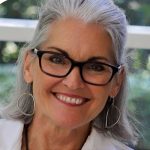 Dr. Melisa Holmes is an ob-gyn, mom of 3 young adult daughters, co-founder of the digital health company, Girlology, and co-founder of the non-profit, The Period Education Project. She has over 25 years clinical experience in both academics and private practice with a specialty in Pediatric & Adolescent Gynecology.
Throughout her career, she has been a passionate educator for peers, residents, students, and especially her patients and their caregivers. She remains a fierce advocate for girls’ and young womens’ health. She has published 5 books under the Girlology brand, numerous academic book chapters and peer-reviewed articles on topics ranging from contraception to violence against women, to pediatric gynecologic issues.
She has also served as an oral board examiner for the American College of Obstetricians and Gynecologists, a keynote speaker at national conferences, and a consultant to global brands including Always, Tampax, and CVS Health. After 30 years in South Carolina, she recently moved back to her home state of Georgia where she enjoys cheering for her team (Go Dawgs), enjoying her husband’s retirement schedule, and visiting her daughters as often as possible.